The Pepsi Bottling Group – Mission + Culture
Food & Beverage / CPG
Strategy + Transformation
Client
The Pepsi Bottling Group
Timeline
1999 to 2010
Services
Culture Strategy


Challenge
A new company needed a culture of its own.
In 1999, The Pepsi Bottling Group was preparing to separate from PepsiCo and become an independent publicly traded company. The structural work was significant. But leadership recognized an equally important challenge: creating a distinct identity for the organization and giving thousands of employees a common understanding of what it meant to be part of PBG.
The mission needed to explain why the company existed, establish its identity, and describe how people were expected to work. It had to be simple enough for the front line, meaningful enough for leadership, and relevant across a growing international organization.
This wasn't simply an exercise in finding the right words.
It was about defining a way of working.
Strategic Insight
A mission becomes meaningful when people can see themselves in it, and know what to do because of it.
Rather than treating the mission as a corporate statement to be announced, the work focused on connecting business ambition with observable behavior.
PBG's purpose was expressed through three stakeholder outcomes: helping customers build their businesses, employees build their futures, and shareholders build their wealth.
Supporting that promise were four Rules of the Road: Drive Local Market Success. Act Now. Do It Today. Get Results. Set Targets. Keep Score. Win. Respect Each Other.
The language was deliberately straightforward. The principles weren't intended to describe abstract corporate values. They described how PBG expected people to lead, make decisions, work together, and deliver results.
Strategy became behavior.
What We Created
A culture system designed to move from words to behavior.
Fluence helped shape a mission architecture that connected PBG's business purpose, stakeholder commitments, and expected behaviors in one simple system.
But defining the language was only the beginning. Leadership alignment, local activation, employee participation, and recognition were designed to help people understand what the principles meant in practice and see their own role in bringing them to life.
The goal wasn't simply awareness. It was shared ownership.
A clear mission architecture connected PBG's business purpose, stakeholder commitments, and four Rules of the Road in a common language people across the organization could understand and use.
Senior leaders gathered for a Cornerstone Meeting designed to bring the mission to life, explore what the principles meant in practice, and prepare leaders to carry them into their own organizations.
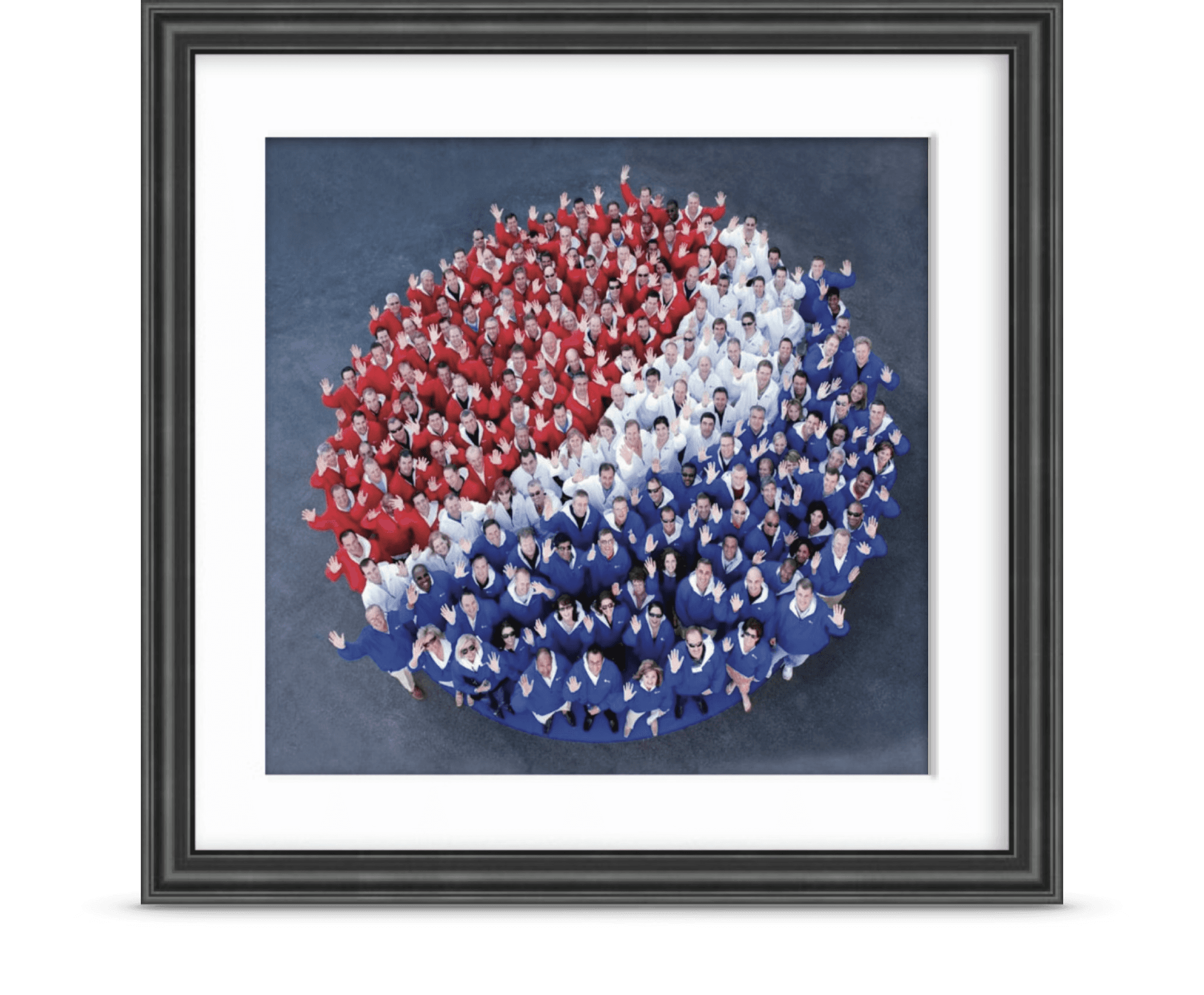
A coordinated company-wide experience introduced the mission through local leaders, real examples, employee recognition, and participation, giving employees an active role in the formation of the new company.
Leaders were equipped to translate the principles through examples relevant to their own people and markets, helping a shared culture remain meaningful across a geographically distributed organization.
Employees and leaders were recognized for demonstrating the Rules of the Road in practice, turning abstract principles into visible examples of the behaviors PBG valued.
Employees were invited to sign the PBG charter as founders of the organization, reinforcing the idea that culture wasn't simply being announced from headquarters: it was something people would build together.
RESULTS + SIGNALS
What success looked like.
PBG continued to publish and reinforce its mission and Rules of the Road years after the initial launch. By the company's tenth anniversary, leadership described the Rules as a guiding light for the organization and connected the decade with sustained improvements in employee satisfaction, a more diverse and inclusive workplace, recognition programs, business growth, and a strong shared culture. These outcomes cannot be attributed to a mission statement alone; their significance is that the founding principles remained part of the framework through which PBG understood and reinforced its culture.
CULTURE FOUNDATION
A simple behavioral framework gave employees and leaders a common language for how PBG expected people to work.
ORGANIZATION-WIDE ACTIVATION
A coordinated launch invited employees across the company to participate in the formation of PBG's culture rather than simply receive it.
ENDURING FRAMEWORK
Ten years after PBG's formation, company leadership still described the Rules of the Road as a guiding light for its culture.


WHAT THIS PROVES
Strategy + Transformation
Related Work


