Brand Experience & Design Systems
Website UX & Interface Design
Websites need clear navigation, page structure, content hierarchy, and interface patterns that help buyers understand what matters and know what to do next.
When to use this offering
This offering is useful when a website contains the right information, but the experience is difficult to navigate, scan, understand, or act on. The issue is often not the amount of content. It is that page hierarchy, navigation, calls to action, and interface patterns are not aligned with how buyers look for information.
Buyers cannot find what they need
Important services, resources, proof, or next steps are buried within unclear pages and pathways.
Pages are hard to scan
Priority pages are too dense, too flat, or missing a clear order of information.
Navigation reflects internal structure
Menu labels and groupings make sense internally but do not match how buyers search for information.
Next steps are unclear
Calls to action are inconsistent, difficult to find, or shown before users are ready to act.
Sales cannot rely on the site
Sales teams send prospects to the website, but the pages do not support common buyer questions or conversations.
Mobile creates friction
Important content becomes harder to read, navigate, compare, or use on smaller screens.
Redesign decisions are stuck
Stakeholders cannot agree on page structure, hierarchy, or component needs before design and development begin.
What you get
Deliverables may include website UX findings, user journey maps, navigation recommendations, page wireframes, interface concepts, reusable component guidance, annotated page designs, responsive UX direction, and a prioritized usability improvement plan.
Website UX Findings
Priority User Journey Map
Navigation Recommendations
Priority Page Wireframes
Interface Design Concepts
Clearer Buyer Paths
Stronger Page Hierarchy
Easier Navigation
Clearer Next Steps
More Consistent Components
Build-Ready Direction
Annotated Page Designs
Responsive Design Guidance
Usability Improvement Plan
What this can include
What Website UX & Interface Design Can Include
Every engagement is shaped by the website’s priority pages, buyer journeys, CMS constraints, existing brand system, and level of redesign support required.
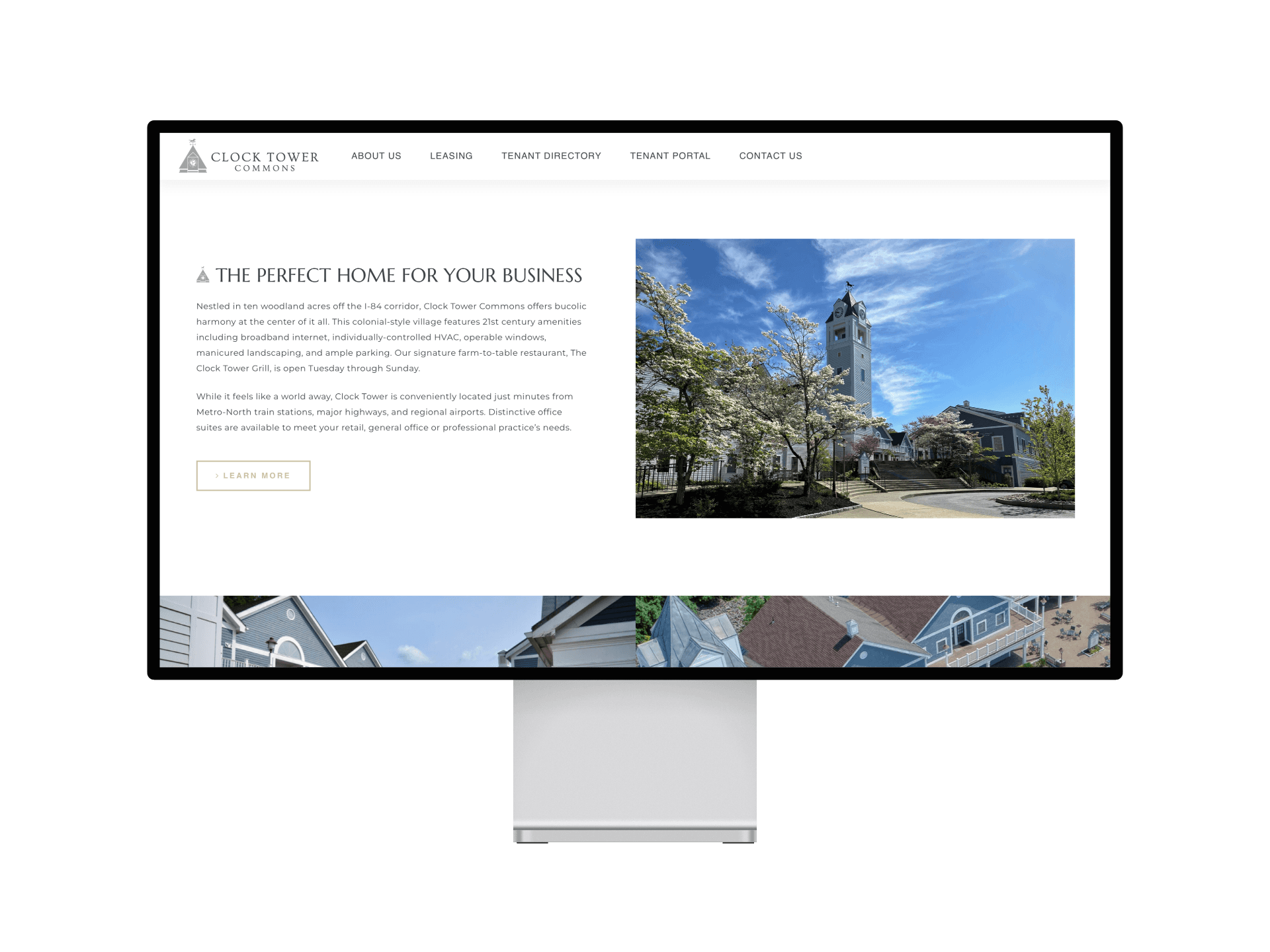
Great website UX isn’t about giving everyone the same experience, it’s about helping different people find the experience they need. Clock Tower Commons serves prospective tenants evaluating the property, customers looking for businesses and services, and existing tenants who need ongoing access to information and resources. Rather than forcing those audiences through the same path, the website uses clear navigation, content hierarchy, and purposeful interface patterns to organize each journey while keeping them connected within one cohesive experience.
Explore the website to see how marketing content, leasing information, the tenant directory, and tenant resources work together, helping the property attract new businesses, connect visitors with existing tenants, and support the people who already call Clock Tower Commons home.


Best fit
Who Website UX & Interface Design Helps
Marketing Leaders
Content systems and brand authority that attract, engage, and convert.
Mid-Market Companies
Right-sized systems and sprints that deliver impact quickly and scale with you.
Sales Teams
Tools, content, and systems that help teams sell with more clarity and consistency.
Enterprise Organizations
Align complex teams, tools, and communications to drive transformation.
Step by step
01
Assess
We review how priority users currently experience the website. The goal is to identify where navigation, page structure, calls to action, responsive behavior, or interface patterns create friction.
Priority page review
Navigation and pathway assessment
Content hierarchy review
CTA and form assessment
Desktop and mobile review
Known pain-point collection
Analytics review, when available
UX issue prioritization
02
Structure
We define how users should move through priority pages and what they need to understand at each stage. This creates the structural direction for navigation, hierarchy, wireframes, proof placement, and next steps.
Priority audience definition
Buyer question mapping
User journey mapping
Navigation recommendations
Page pathway planning
Content hierarchy definition
Priority page wireframes
Proof and CTA placement
Cross-linking logic
03
Design
We turn the approved structure into practical interface direction that design, CMS, and development teams can use. The output can support selected page improvements or a larger redesign.
Interface design concepts
Reusable component direction
Responsive layout behavior
Interaction recommendations
Usability considerations
Accessibility considerations
Annotated page designs
Implementation guidance
Build and handoff priorities
Related Services
Related Offerings for Website UX, Interface Design, and Optimization
Content, Search & AI Visibility
Website & Content Architecture
Clarify what your company offers, who each service helps, what pages should exist, and how buyers should move through the website.
Brand Experience & Design Systems
Design, Brand Refresh & Visual Standards
Fluence refreshes existing brand visuals, clarifies practical usage standards, and shows teams how to apply the brand consistently without starting over with a full rebrand.
Digital Products & Enterprise Platforms
Application UX & Interface Design
Fluence improves application workflows, screens, interface patterns, and interaction behavior so users can complete important tasks with less confusion.
Digital Products & Enterprise Platforms
Platform Experience Optimization
Fluence improves live platforms by identifying user friction, adoption barriers, navigation issues, content gaps, and workflow problems—then prioritizing what should change first.
Content, Search & AI Visibility
Performance Measurement & Optimization
Teams need to know which content, pages, campaigns, and visibility efforts are working—and what should be refreshed, expanded, retested, or improved next.
Common questions
What is website UX and interface design?
What problem does this offering solve?
Who is this offering for?
What is included?
Does this include website development?
How is this different from Website and Content Architecture?
